
CSIR NET June 2017 Q117: Hydrology / Watershed Hydrograph Analysis
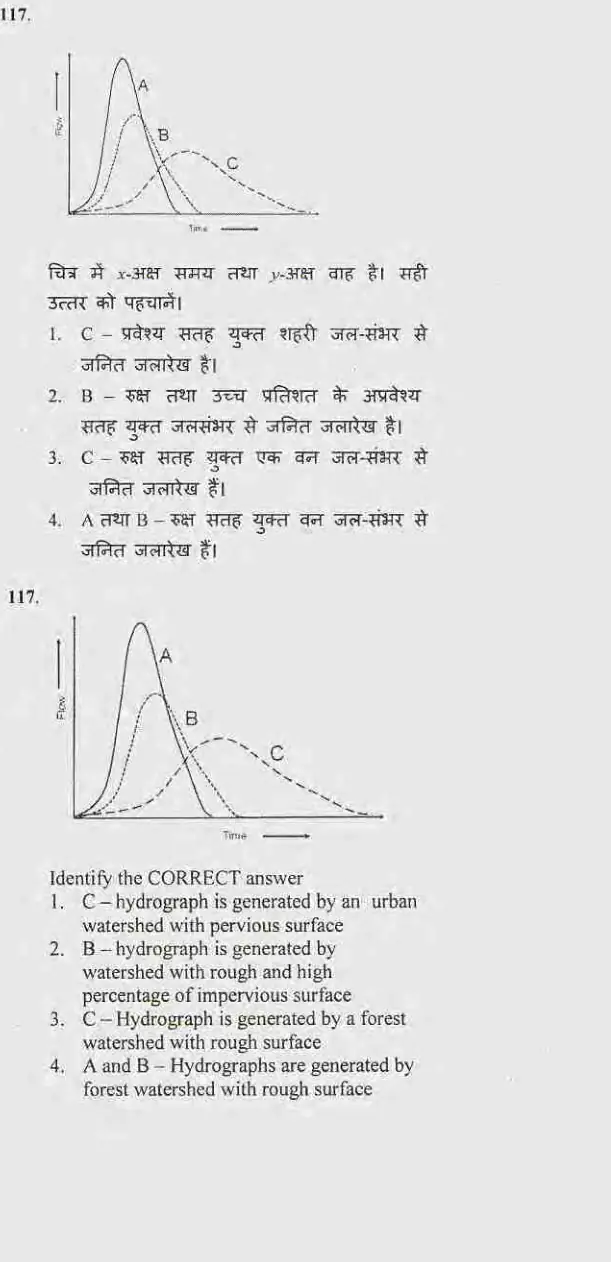
Hydrograph shape as a function of watershed surface characteristics
Hydrograph shape reflects how quickly and how much of a watershed's rainfall reaches the outlet as surface runoff. A sharp, high, early-peaking hydrograph (A) reflects rapid runoff with little infiltration loss (e.g., impervious or bare/rocky surfaces). A broad, low, delayed-peaking hydrograph (C) reflects slow, attenuated runoff, consistent with a forested watershed with a rough surface, where dense vegetation, litter, and root channels promote infiltration, interception, and slowed overland flow, spreading the discharge out over a longer time with a lower peak.
1. C from an urban pervious watershed - urban watersheds are typically characterised by high imperviousness producing sharp, not broad/delayed, hydrographs, incorrect. 2. B from a rough, highly impervious watershed - 'rough' and 'highly impervious' are not typically compatible descriptors, and this does not match B's intermediate shape consistently, incorrect. 3. C - hydrograph generated by a forest watershed with rough surface - correct; consistent with delayed, attenuated, low-peak runoff behaviour. 4. A and B from forest watershed with rough surface - A's sharp fast peak is inconsistent with the slow, infiltration-dominated response expected of a forested watershed, incorrect.