
CSIR NET June 2025 Q63: Marine Geology / Pelagic Sediments
Carbonate compensation depth and siliceous oozes
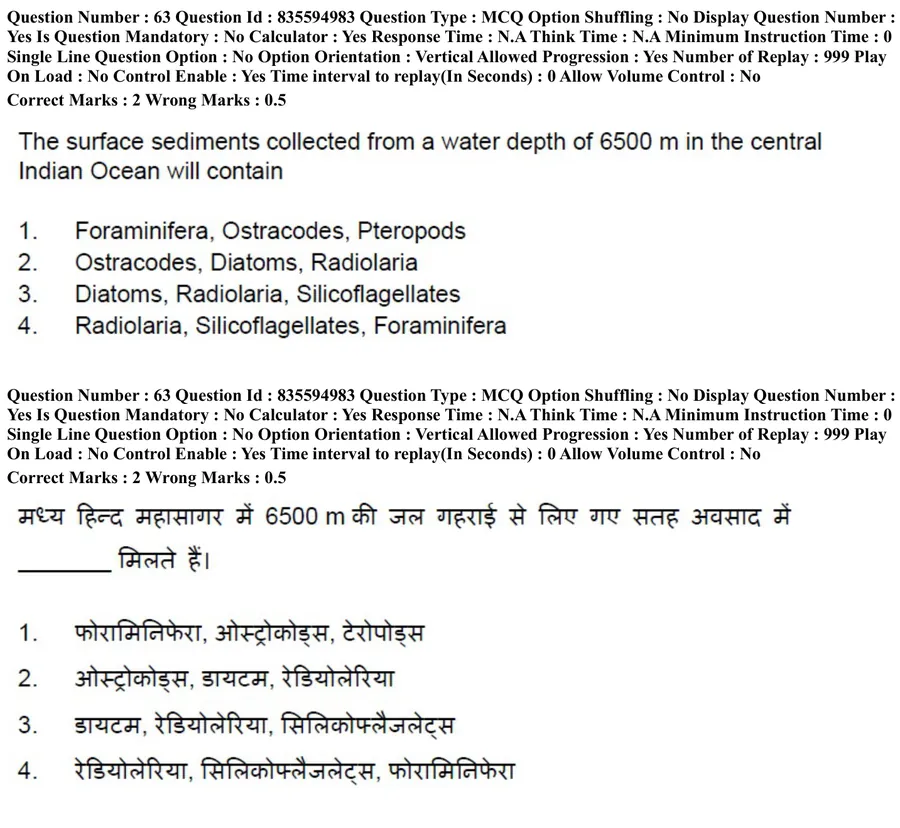
At 6500 m in the central Indian Ocean the seafloor is well below the carbonate compensation depth (CCD, about 4500 to 5000 m). Calcium carbonate shells (foraminifera, pteropods, ostracods) dissolve before they can accumulate, while opaline silica tests survive. Surface sediments are therefore dominated by siliceous remains such as diatoms, radiolaria and silicoflagellates, along with red clay.
1. Foraminifera, ostracodes, pteropods - incorrect; all calcareous and dissolved below the CCD. 2. Ostracodes, diatoms, radiolaria - incorrect; ostracods are calcareous. 3. Diatoms, radiolaria, silicoflagellates - correct; all siliceous and preserved below the CCD. 4. Radiolaria, silicoflagellates, foraminifera - incorrect; foraminifera are calcareous.