
CSIR NET June 2025 Q38: Glacial Geomorphology / Glaciofluvial Landforms
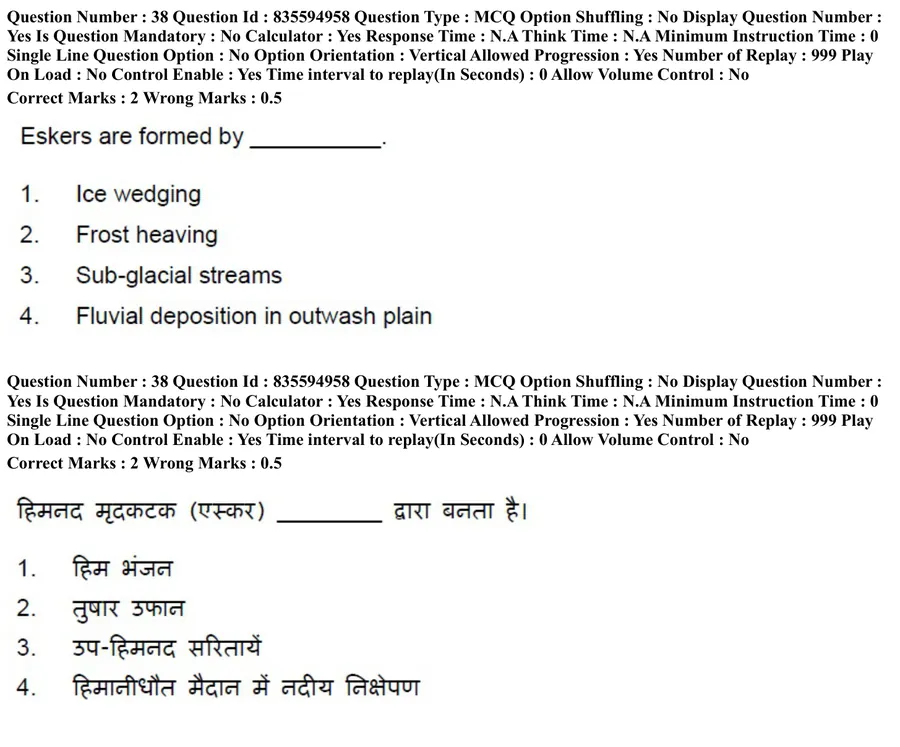
Origin of eskers
Eskers are long, narrow, winding ridges of stratified sand and gravel. They form as deposits of meltwater streams flowing in tunnels beneath (and sometimes within) a glacier. When the ice melts, the channel fill is left as a sinuous ridge tracing the former subglacial drainage path.
1. Ice wedging - incorrect; frost action that splits rock or forms ice wedges in permafrost. 2. Frost heaving - incorrect; upward movement of soil due to freezing, forming periglacial features. 3. Sub-glacial streams - correct; eskers are the fills of subglacial meltwater tunnels. 4. Fluvial deposition in outwash plain - incorrect; forms sheet-like sandur deposits in front of the glacier, not ridges.