
CSIR NET June 2017 Q146: Biological Oceanography / Phytoplankton Season…
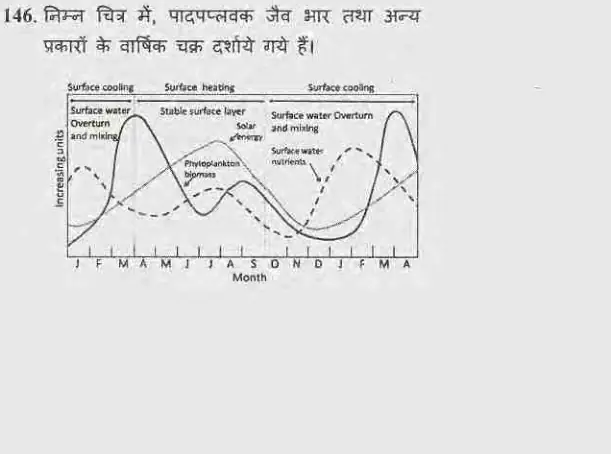
Seasonal phytoplankton biomass decline due to surface-water stratification
Following the spring phytoplankton bloom, increasing solar heating through late spring and summer warms the surface layer, creating a strong, stable density stratification (a shallow, warm mixed layer sitting above cooler, nutrient-rich deep water). This stratification, shown in the figure as the 'stable surface layer' phase, prevents vertical mixing from resupplying nutrients from depth to the sunlit surface layer, so nutrients in the surface layer become progressively depleted, causing the observed decline in phytoplankton biomass during June-July despite abundant light.
1. Very high species diversity and abundance - does not explain a decline in biomass; unrelated to the stratification-driven nutrient limitation, incorrect. 2. Stratification of the surface waters - correct; matches the classic seasonal succession mechanism limiting nutrient resupply. 3. Deep mixed layer - a deep mixed layer would resupply nutrients and support the spring bloom, not cause a summer decline, incorrect. 4. Poor/low species diversity - not a causal driver of the biomass decline itself, incorrect.